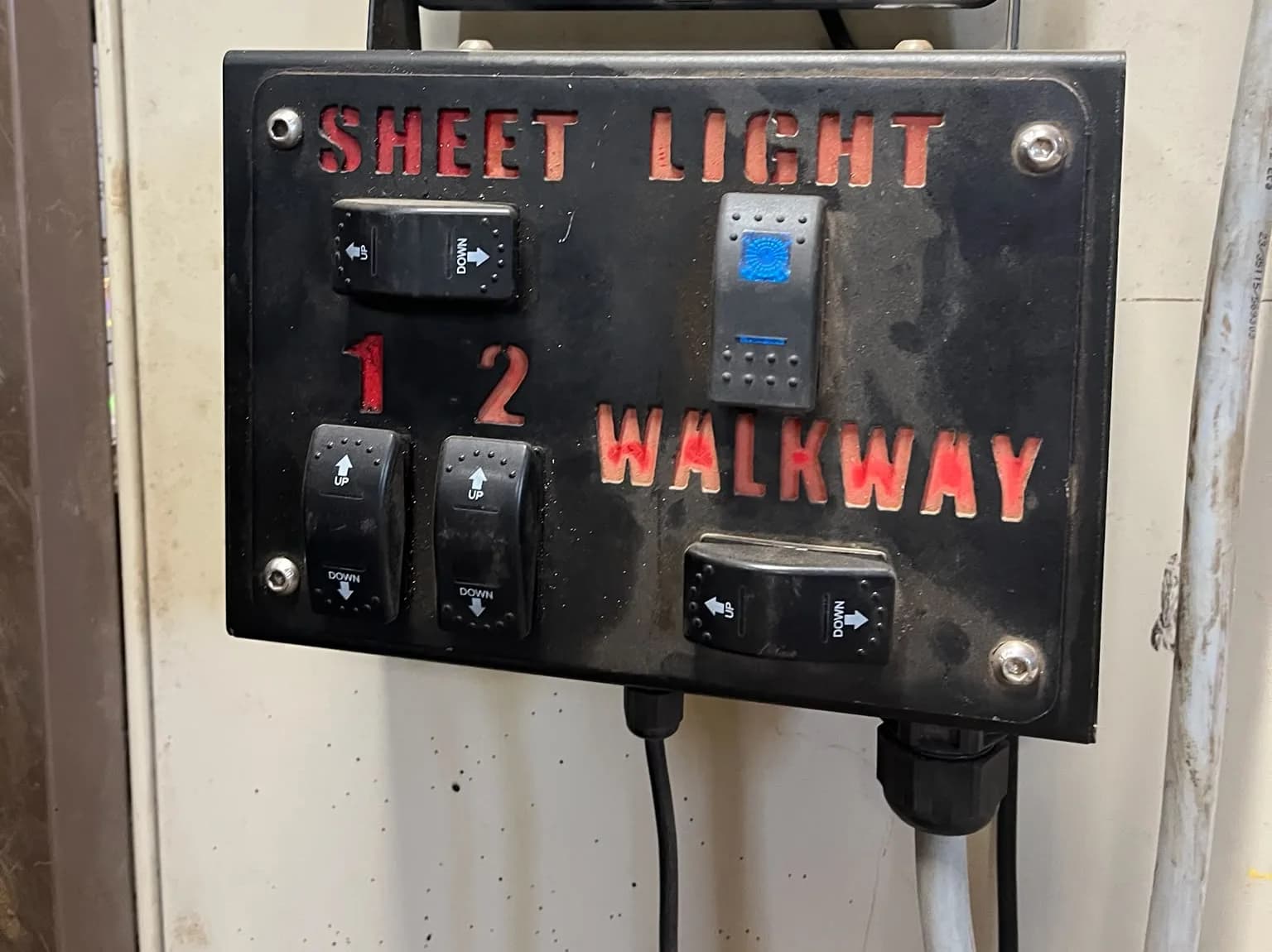
A hydraulic solenoid valve is an electrical load. The coil wants 12 V or 24 V and a few amps, and something has to close that circuit. On older setups that is a toggle in a switch box on the dash, with a cable out through the back window. On a tractor with ISOBUS, the same coil can be switched from the tractor's own screen or a joystick button.
Here is which valves fit, what stays as it is, how to wire the coils, and where an on/off relay stops being the right tool.
Which hydraulic valves this covers
On/off solenoid valves: the coil is energised or it is not. These are the valves that hang off a tractor's spool valve to share one oil supply between several functions.
| Valve | What it does | Coils | Relay channels |
|---|---|---|---|
| 6/2 diverter | Sends the oil from one pair of lines to one of two functions | 1 | 1 |
| 8/3 diverter | Picks one of three paths: coil A, coil B, or neither | 2 | 2 |
| Selector valve | Switches one function in or out of a circuit | 1 | 1 |
| On/off seat valve | Opens or holds a line, leak-tight when closed | 1 | 1 |
| Double-solenoid directional valve | One coil per direction | 2 | 2 |
The rule: one channel per coil.
What stays the same, and what changes
The hydraulic circuit does not change. Rubber hoses, steel fittings, valve block and cylinders stay where they are. The tractor's own spool valve still supplies the oil and moves the cylinder. The solenoid valve only decides where that oil goes. The coils stay too: a 12 V coil that worked from a toggle works from a relay.
What changes is the switch. The toggle box goes, a relay channel closes the coil circuit, and the button lives on the tractor:
- The tractor screen. The module shows up on the Virtual Terminal (the ISOBUS display in the cab) as buttons for
CH1toCH8. Tap one and the relay switches. - An AUX-N button. AUX-N is the part of ISOBUS that puts an implement's functions on the tractor's joystick and armrest buttons. You assign a channel from the tractor's own menu. The ISOBUS AUX-N complete guide covers the menus.
Rename each button on the screen, say 3RD FN or TOPLINK, and pick a valve icon. The same name shows up in the AUX-N menu, so you are not guessing which CH is the diverter.
Pulling out a whole toggle panel rather than adding a valve or two? The cab switch box replacement guide covers that swap. For work lights, beacons and motors, see Control Any 12V/24V Device from Your ISOBUS Terminal.
Wiring a solenoid valve to a relay channel
Every channel has three screw terminals: COM, NO and NC. A coil wires the same way on every channel:
- Supply positive to
COM. NOto the coil.- The coil's other side to ground.
Channel on: the coil energises. Channel off: the valve springs back to its rest position.
Where the coil power comes from
The ISOBUS connection powers the module. The coils need their own supply:
- Rear external ISOBUS socket: it carries a battery feed that the tractor fuses at 60 A. That feed goes to the
COMterminals. - In-cab ISOBUS socket: no load supply there. Feed
COMfrom a +12 V or +24 V source such as the battery.
The tractor sockets guide explains which socket carries what. Match the coil voltage to the supply: 12 V coil on a 12 V tractor, 24 V coil on a 24 V one.
Current
Each channel switches up to 10 A. A solenoid coil draws a few amps, so one coil per channel leaves room. The coil label gives the current or the wattage. For watts, divide by the voltage: a 36 W coil on 12 V draws 3 A. Size the wire and fuse from the coil's datasheet and the length of the run.
A diode across the coil
A coil kicks back a voltage spike when the current stops. A diode across the coil, cathode to the positive side, absorbs it and is good practice. Some coils and valve plugs already have suppression built in. Fit one only if you are confident about polarity and what is already there: a diode the wrong way round shorts the supply the moment the relay closes.
Double-solenoid valves
Put each coil on its own channel and its own button. Do not group both coils under one button. Energising both sides of an 8/3 diverter or a directional valve at once does nothing useful.
TOG or MOM: pick per valve
Each button runs in one of two modes, set on the screen:
TOG(toggle): press once on, press again off. Right for a selector that stays put while you work. Switch the loader over to the third function, run the grab, switch back when done.MOM(momentary): on only while you hold the button. Right for a function you hold, such as a directional valve that should only open while your thumb is on it.
Change the mode later from the screen. No rewiring. One button can also switch several channels: a diverter coil and a work light on one press is a common pairing.
What a relay cannot do
A relay is on or off. So the module does not do:
- Proportional control. No variable current to a proportional coil.
- PWM. No pulse-width signal to a valve that expects one.
- Flow control. Flow comes from the tractor's spool valve or a flow control valve in the circuit.
- Pressure control. Relief and pressure settings stay on the hydraulic side.
If a valve needs a variable signal, keep whatever drives it today. The trailer hydraulics post shows that split on a trailer block.
Where this gets used
- Front loader third function. A 6/2 diverter at the loader sends one circuit's oil to the grab instead. One channel, on
TOG. The front loader third function use case walks through it. - Hydraulic top link selector. A diverter shares a spool valve between the top link and another function.
- Folding a frame. Seat valves pick which fold cylinder gets oil, so one spool valve folds each section in turn.
- Trailer tipping. On a tipper with a hydraulic tailgate, a selector picks which cylinder the tractor's spool drives.
- Mower or loader wagon diverter. One spool, several functions, a selector coil for each. If those diverters sat on an implement joystick, see replacing that joystick with AUX-N.
Wiring your own relay box is also an option: the ISOBUS Block vs DIY relay box comparison puts both routes side by side.
Frequently asked questions
Can I control a hydraulic solenoid valve from the ISOBUS terminal?
Yes, if it is an on/off solenoid valve. Wire the coil to a relay channel on an ISOBUS relay module and the channel shows up as a button on the tractor's Virtual Terminal. Tap it and the relay energises the coil. You can also assign it to a joystick or armrest button through AUX-N.
Do I need to change my hydraulic hoses?
No. The relay module replaces the control side only: the switch that energises the coil. Hoses, fittings, the valve block and the cylinders stay as they are, and the tractor's spool valve still supplies the oil.
Can ISOBUS Block control a proportional valve?
No. Each channel is a relay, so it is on or off. It cannot provide proportional current, PWM, flow control or pressure control. It can switch a proportional valve's separate on/off coils, while the variable signal stays with whatever drives it now.
How many amps does a solenoid valve draw?
A few amps. The exact figure is on the coil label, or divide the rated wattage by the supply voltage. Each ISOBUS Block channel switches up to 10 A, so one coil per channel is well within range.
Can I put a diverter valve on a joystick button?
Yes. Assign the diverter's channel to a joystick or armrest button through the tractor's AUX-N menu. Set it to TOG if the diverter should stay switched until you press again, or MOM if it should only switch while you hold the button.
Need an ISOBUS relay module for switching solenoid valves, diverter valves or work lights? ISOBUS Block gives you 8 relay outputs, controlled from your tractor's screen and AUX-N buttons.